
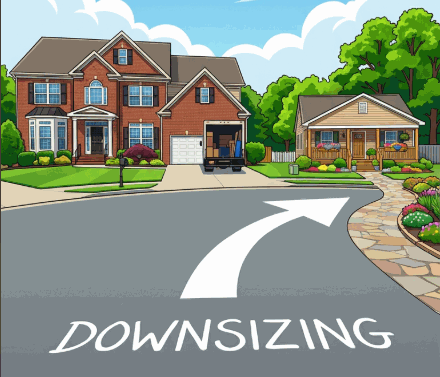
Downsizing is the deliberate choice to move into a smaller home, reduce possessions, and simplify daily life. For people thinking about downsizing, it’s often triggered by a life transition—retirement, an empty nest, divorce, or a growing desire for freedom.
While it can feel like a loss at first, downsizing frequently opens the door to something bigger: flexibility, clarity, and new opportunities. Rather than focusing on what you give up, it helps to look closely at what you gain.
Downsizing can reduce financial pressure, lower maintenance demands, and free up time and money. That freedom can be redirected into experiences, education, travel, health, or entirely new lifestyle choices that weren’t possible before.
Why Smaller Can Feel Lighter
A large home often comes with invisible weight—mortgage payments, utilities, repairs, cleaning, and mental clutter. Downsizing strips away much of that overhead.
Here’s what many people notice within months of making the move:
- Fewer monthly bills and more predictable expenses
- Less time spent cleaning, fixing, and organizing
- Easier day-to-day routines
- A stronger sense of control over finances and time
The result isn’t just simplicity. It’s flexible. And flexibility is what makes a fresh start possible.
Financial Flexibility: The Hidden Upside
Downsizing can change your financial picture almost immediately. Whether you rent a smaller place or sell a home and buy something more modest, the difference often shows up as disposable income.
That extra breathing room can be used in practical or meaningful ways:
- Paying off lingering debt
- Building or rebuilding savings
- Funding travel or hobbies
- Investing in personal or professional growth
Instead of your money being tied up in square footage, it becomes something you can actively use.
A Simple Checklist Before You Downsize
Before making the leap, it helps to approach downsizing with intention rather than urgency.
Downsizing readiness checklist:
- Clarify your main reason (cost savings, lifestyle change, location, health, freedom).
- Review your current housing expenses line by line.
- Decide what you truly need versus what you’re maintaining out of habit.
- Picture your ideal daily routine in a smaller space.
- Run the numbers on at least two realistic housing alternatives.
If most of these steps feel doable—or even energizing—you’re likely ready.
Simplified Living, Redefined
Simplified living doesn’t mean bare walls or constant sacrifice. It means designing your life around what you actually use and enjoy.
Many people who downsize report:
- Feeling calmer in a less crowded environment
- Finding it easier to stay organized
- Spending more time outside the home
- Feeling less attached to “stuff” and more engaged with life
A smaller home often encourages more intentional choices about how you spend your time, where you go, and what you value.
Turning Saved Time and Money into Education
One overlooked benefit of downsizing is the opportunity to reinvest in yourself. With lower expenses and fewer household demands, many people finally have the space—financially and mentally—to pursue education that supports a fresh start or career shift.
Using downsizing savings to earn a degree can open doors that once felt closed. Online programs make it possible to study without relocating or giving up flexibility, and they’re often easier to fit into a simplified lifestyle. If you’re already a nurse, you can enhance your career and improve patient outcomes by earning an online RN to BSN degree—if this aligns with your goals, you may want to consider this option.
Lifestyle Choices That Often Follow Downsizing
Downsizing rarely happens in isolation. It tends to spark other changes that reinforce the fresh-start effect.
| Area of Life | Common Shift After Downsizing |
| Location | Moving closer to family, healthcare, or walkable communities |
| Daily Routine | Less housework, more personal time |
| Travel | Easier to leave for extended trips |
| Social Life | More outings, fewer obligations at home |
| Work | Part-time, remote, or purpose-driven roles |
These shifts don’t happen automatically—but downsizing makes them more achievable.
A Helpful, Neutral Resource
For people exploring downsizing from a financial perspective, the Consumer Financial Protection Bureau (CFPB) offers clear, unbiased guidance on housing decisions, budgeting, and major life transitions. Their resources can help you evaluate trade-offs and avoid costly mistakes during a move.
Frequently Asked Questions
Is downsizing only for retirees?
No. People downsize at many life stages, including mid-career, after divorce, or when seeking location independence.
Will I regret getting rid of my belongings?
Most people don’t miss items they rarely use. Regret is more likely when downsizing is rushed rather than intentional.
Does downsizing always save money?
Often, but not always. Savings depend on location, housing market, and lifestyle choices after the move.
How long does it take to feel “settled” after downsizing?
Many people report an adjustment period of three to six months before fully appreciating the benefits.
Downsizing isn’t about shrinking your life—it’s about reshaping it. By reducing financial strain and simplifying daily demands, you create room for flexibility, growth, and new priorities. For many, that shift becomes the foundation for a genuine fresh start. When less house supports more life, the trade-off is often worth it.