
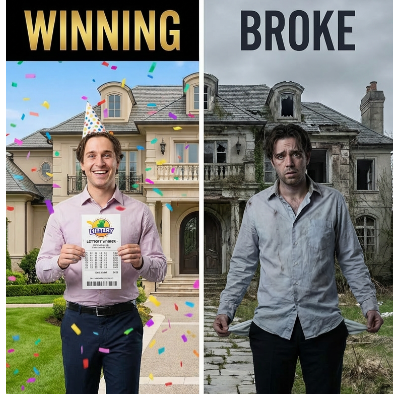
Key Takeaways:
- Many lottery winners go broke because they lack the skills to preserve wealth, even if they suddenly acquire it
- A lump sum jackpot is capital—not income—and must be managed carefully
- Big purchases often turn into expensive liabilities, not true assets
- Friends, family, and social pressure create a hidden “social tax” on winnings
- Winners who succeed follow a disciplined plan focused on income, preservation, and boundaries
Why Do Lottery Winners Go Broke?
Winning the lottery is often seen as a shortcut to financial freedom—but for many, it becomes a fast track to financial collapse.
Studies and widely reported cases suggest a significant percentage of lottery winners and professional athletes face serious financial trouble within a few years. The reasons are surprisingly consistent and reveal deeper truths about money, behavior, and human psychology.
The Skills Gap: Why Sudden Wealth Disappears
1. Wealth Creation Skills vs. Wealth Preservation Skills
The skills required to generate a fortune are almost the opposite of the skills required to preserve one.
Wealth builders—entrepreneurs, investors, high performers—tend to:
- Take risks
- Act quickly
- Pursue growth
- Embrace uncertainty
But preserving wealth requires:
- Risk control
- Patience
- Long-term thinking
- Defensive decision-making
Lottery winners skip the learning curve. They receive wealth without developing the habits needed to manage it.
A well-known example is Jack Whittaker, who won hundreds of millions but later faced financial and personal turmoil. The issue wasn’t just spending—it was the absence of a preservation mindset.
2. Mistaking Capital for Income
One of the biggest financial mistakes lottery winners make is confusing a lump sum with a salary.
If you win $10 million, it does not mean you can spend $1 million per year. That money must last—possibly for decades. A sustainable withdrawal rate — one that keeps the principal intact across decades — is only around 3% to 4% annually. In practical terms, that $10 million is a salary of $300,000 to $400,000 a year, nothing more and after taxes $10 million is closer to $5 million.
For professional athletes, the window of peak earnings is very small. The average NFL career only lasts about 3.3 years; the average NBA career, about 4.5. A young player who never earned more than minimum wage who now has a $10 million contract feels financially invincible — but after taxes, agent commissions, and union dues, the real number is often closer to half that. So, he is even worse off than the $10 million lottery winner.
Buying Liabilities Disguised as Assets
This misunderstanding leads to expensive purchases that drain wealth:
- Large homes
- Luxury cars
- Boats and vacation properties
These are not true investments—they are ongoing expenses.
Michael Carroll is a classic example. After winning millions, he spent heavily on lifestyle upgrades that required constant cash outflow. Within a few years, his fortune was gone.
3. The Social “Tax” of Sudden Wealth
Sudden wealth changes relationships—often dramatically.
Lottery winners frequently face:
- Requests for loans
- Financial expectations from family
- “Investment opportunities” from acquaintances
- Pressure to give generously
This creates a hidden but powerful social tax.
Evelyn Adams, who won the lottery twice, ultimately lost her fortune in part due to generosity, poor decisions, and a lack of boundaries.
The emotional difficulty of saying “no” can quietly destroy even large fortunes.
What to Do If You Win the Lottery
Winning the lottery doesn’t have to end badly. The difference between those who keep their wealth and those who lose it comes down to early decisions.
Here’s a practical, step-by-step strategy.
1. Pause and Stay Quiet
- Don’t rush to claim or spend the money
- Avoid public announcements if possible
- Take time to think before making any decisions
This single step can prevent many costly mistakes.
2. Assemble a Professional Team
Before touching the money, build a small, trusted group:
- Estate attorney
- Tax professional (CPA)
- Fee-only financial advisor
- Free web-based Financial Advice
They help you avoid legal, tax, and investment pitfalls.
3. Treat the Money as Capital—Not Income
Think of your winnings as a lifetime endowment.
- Invest the majority of it
- Spend only what it generates
- Avoid dipping into principal
This mindset shift is critical.
4. Avoid Lifestyle Inflation Early
Resist the urge to upgrade everything immediately.
- Delay big purchases for 6–12 months
- Rent or test lifestyle changes before committing
- Focus on sustainability, not status
5. Be Skeptical of “Assets” That Cost Money
Before buying anything expensive, ask:
- Does this generate income?
- Or does it require ongoing payments?
A $5 million home might feel like wealth—but it often behaves like a financial drain.
6. Set Clear Boundaries for Giving
Decide in advance:
- How much you’re willing to give
- To whom
- Under what conditions
Consider setting up:
- A formal gifting plan
- A charitable foundation
- A “no loans” policy
Boundaries protect both your finances and your relationships.
7. Build a Sustainable Income Stream
Focus on investments that produce income:
- Dividend-paying stocks
- Bonds
- Real estate (carefully managed rental properties)
- Broad index funds
- Hedge Against Inflation
The goal: live off returns, not the principal
The Few Who Got It Right
Not every lottery winner goes broke. The ones who succeed tend to follow a very different playbook:
- They stay anonymous (when possible)
- They assemble a team (lawyer, accountant, advisor)
- They treat the money as finite capital
- They invest conservatively
- They control spending early
In short, they adopt the mindset of wealth preservation, not consumption.
Final Thoughts
Lottery winners don’t go broke because they’re unlucky—they go broke because sudden wealth exposes a gap between having money and knowing how to manage it.
The pattern is clear:
- Losers treat capital like income
- Losers buy liabilities instead of assets
- Losers underestimate social pressure
- Losers lack a preservation strategy
- Losers try to repeat the once-in-a-lifetime event and give most of it back
But with the right mindset and structure, a lottery win can become something rare: Permanent financial freedom
Image generated by Meta AI